
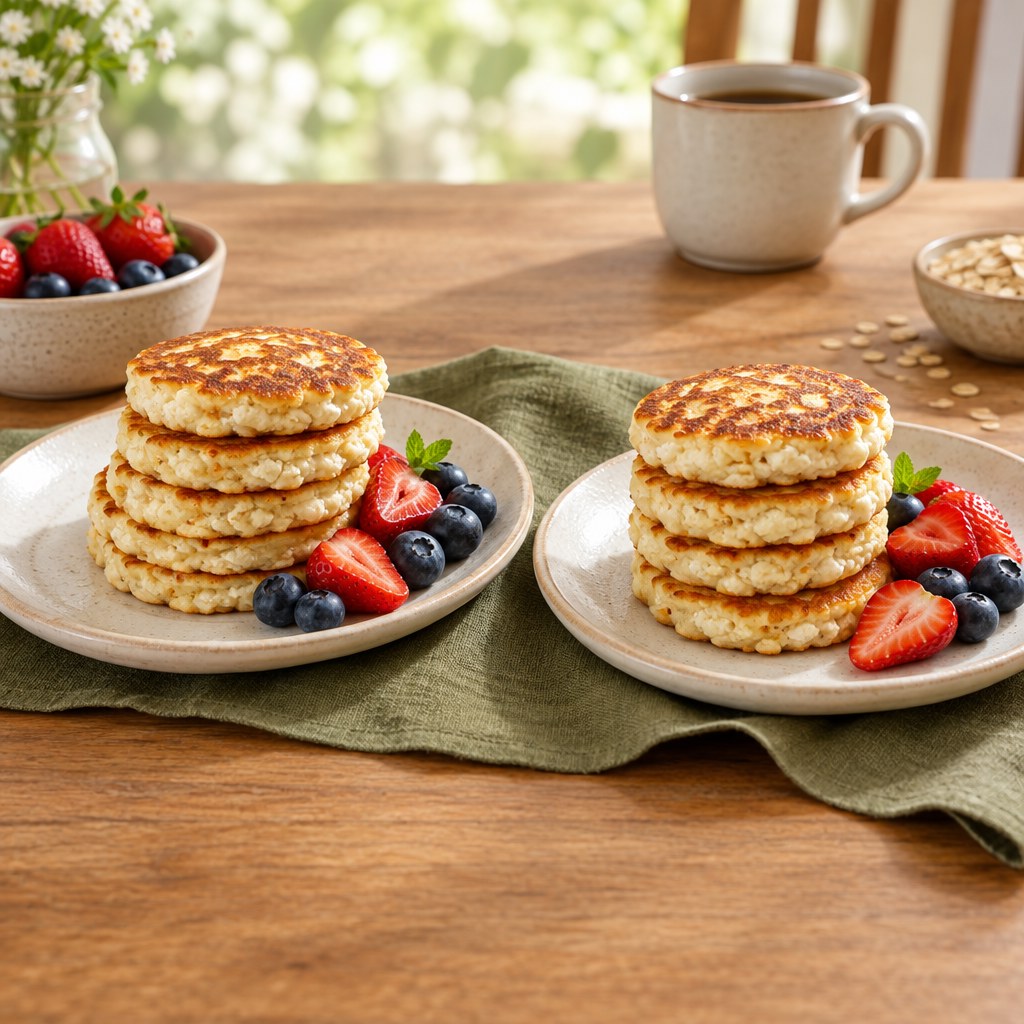
Cottage cheese oat pancakes use a blender to turn rolled oats, cottage cheese and eggs into a thick breakfast batter. They cook into small, tender pancakes with a mild flavor that suits berries, sliced banana or plain yogurt. Keeping them small makes them easier to flip than a large pancake made without wheat flour.
Jump to the recipe · Storage and meal prep
Why this meal fits a busy day
Blending breaks the oats into a fine meal and smooths the cottage cheese curds. A short rest lets the oats absorb moisture, which makes the batter easier to portion. Eggs provide structure, while baking powder gives a little lift. This is a two-serving breakfast: expect roughly eight small pancakes, depending on how much batter you use for each.
Cottage Cheese Oat Pancakes (Blender Batter)
Prep: · Cook: · Total: · Servings: 2
Times are estimates. Read the full method and ingredient labels before starting.
Ingredients
- 1 cup (90 g) rolled oats
- 3/4 cup (170 g) plain cottage cheese
- 2 large eggs
- 2 tablespoons (30 ml) milk, plus 1–2 tablespoons only if needed
- 1 teaspoon baking powder
- 1/2 teaspoon vanilla extract
- 1/4 teaspoon ground cinnamon
- 1 small pinch of salt, optional if your cottage cheese is salty
- 2 teaspoons neutral oil, divided, for the pan
- Optional for serving: berries, sliced banana, plain yogurt or maple syrup
Step-by-step instructions
-
Blend the batter
Add oats, cottage cheese, eggs, 2 tablespoons milk, baking powder, vanilla, cinnamon and optional salt to a blender. Blend until mostly smooth, pausing to scrape down the sides with the motor off. Do not taste uncooked batter.
-
Let the oats hydrate
Rest the batter for 5 minutes. It should fall from a spoon in a thick ribbon. If it becomes too stiff to spread, blend in another tablespoon of milk; add the second extra tablespoon only if necessary.
-
Heat the skillet
Heat a nonstick skillet over medium-low heat. Add a thin coating of oil. The pan should be hot but not smoking. Start with one small test pancake so you can adjust the heat before cooking a full batch.
-
Cook in batches
Spoon about 3 tablespoons batter per pancake into the pan, leaving room between them. Gently spread to about 3 inches (8 cm) across. Cook for 2–3 minutes until the edges look set and the underside is golden. Flip carefully and cook for another 2–3 minutes. Continue until the centers are set, without wet batter; egg dishes should reach 160°F (71°C).
-
Finish and serve
Repeat with the remaining batter, adding a little of the remaining oil as needed. Reduce the heat if the outsides brown too quickly. Divide between two plates and add your chosen toppings.
Texture and troubleshooting tips
Small pancakes are easier to turn because oat batter does not have the elastic structure of wheat flour batter. If a pancake tears, wait longer before flipping the next one and check whether the batter needs its full resting time. If the middle stays wet while the outside browns, lower the heat and cook more slowly. Avoid pressing down with the spatula: it flattens the pancake without helping the center cook evenly.
Substitutions and allergens
Quick oats can be used, but their finer texture may thicken the batter sooner. Steel-cut oats are not a direct substitute. For a gluten-free version, choose certified gluten-free oats and check the baking powder and other ingredients. This recipe contains eggs and milk. Dairy-free cottage cheese alternatives have different moisture and protein levels, so they are not a tested one-for-one replacement.
Serving ideas
Use fruit and yogurt for a creamy, fresh topping, or add maple syrup to taste. The batter is only lightly flavored, so keep toppings separate rather than adding large wet fruit pieces before cooking. Cottage cheese and eggs provide protein, but no exact protein or calorie figure is claimed here because brands, pancake size and toppings vary.
Storage and meal prep
Place leftover pancakes in a shallow container and refrigerate within 2 hours. Use within 3–4 days. Reheat until the centers reach 165°F (74°C); gentle microwave reheating helps preserve their soft texture. Separate cooled pancakes with parchment before freezing so individual portions are easier to remove.
See USDA leftover-storage and reheating guidance.
Frequently asked questions
Do the pancakes taste like cottage cheese?
Blending disperses the curds. The flavor is mild and slightly tangy rather than strongly cheesy; the exact result depends on the cottage cheese brand.
Can I prepare the batter overnight?
For predictable thickness, blend it shortly before cooking. Oats continue absorbing liquid during storage, so an overnight batter can become much thicker and may need adjustment.
Can I skip the blender?
You can begin with finely ground oat flour, but the cottage cheese curds will remain unless you blend or mash them. That changes the texture, so the blender method is the intended version.
Can I make one large pancake?
Smaller pancakes are more reliable with this batter. A large pancake may break when flipped or brown before the middle sets.
More meals to try
- cottage cheese egg bites
- strawberry overnight oats
- Greek yogurt breakfast and lunch ideas
- Browse quick and easy meals
Editorial note: Developed with AI assistance and not yet kitchen-tested. Any AI-generated image is a serving illustration, not a photograph documenting a recipe test.